Last Updated: September 7, 2026
The devastating flash floods of August 26, 2026, have raised an important question among travelers around the world: Is Nepal trekking safe after the 2026 flash flood?
The honest answer is yes for many trekking regions, but not every route is currently operating under normal conditions.
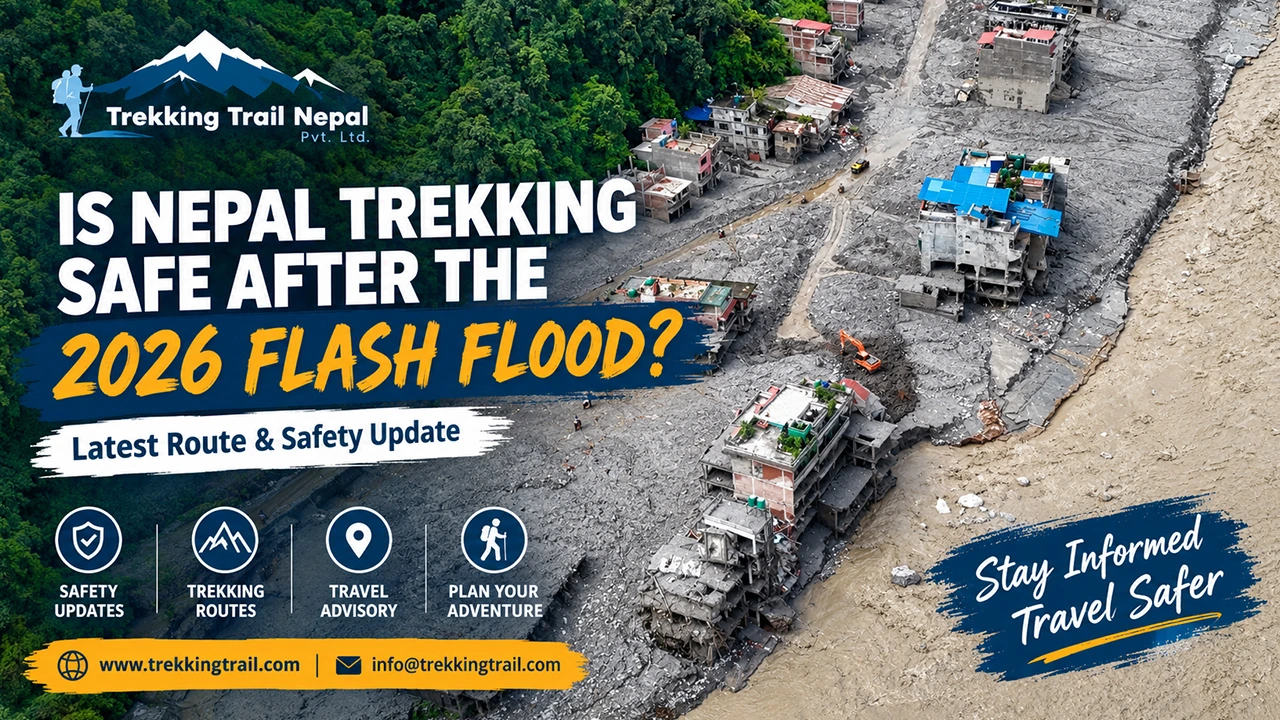
The disaster caused extensive destruction along parts of the Bhote Koshi–Trishuli corridor, particularly in areas of Rasuwa and surrounding districts. Roads, bridges, settlements, and tourism infrastructure were severely affected, while rescue and recovery operations continue. Recent reporting confirms the scale of the humanitarian disaster, with more than 1,300 people reported dead and thousands still missing as of September 7. Source (Reuters)
However, it is important not to treat the whole of Nepal as one affected destination.
Nepal's major trekking regions are spread across different mountain valleys and geographical areas. Recent tourism-sector information indicates that many popular trekking destinations remain operational, while the main difficulty in several regions is access to the trailhead rather than the trekking trail itself.
For travelers planning a Nepal trek in September, October, or November 2026, the most important question is therefore not simply, "Is Nepal safe?” Instead, ask, "Is my particular trekking route safe, is the access route open, and what are the latest local weather and trail conditions?”
What Happened in Nepal on August 26, 2026?
The August 26 disaster was one of the most destructive natural disasters Nepal has experienced in recent years. A catastrophic event near the Nepal–China border sent enormous amounts of water, ice, rock, and debris through the Bhote Koshi and Trishuli river systems.
- Flash flooding and landslides affected the Bhote Koshi–Trishuli corridor.
- Rasuwa and surrounding areas were among the hardest hit.
- Roads and bridges were destroyed.
- The Gyirong/Rasuwagadhi border area was severely damaged.
- Rescue and recovery operations are continuing.
- The disaster also affected international travelers and tourism workers.
Which Areas Were Most Affected by the Flash Flood?
The most severely affected areas included parts of:
- Rasuwa
- Nuwakot
- Dhading
- The Trishuli River corridor
- The Nepal–China border area around Rasuwagadhi/Gyirong
Entire settlements and major infrastructure were damaged or destroyed.
The destruction is particularly significant for tourism because this corridor connects Nepal with Tibet and also provides access toward several trekking and mountain regions.
Did the Flood Affect the Whole of Nepal?
No.
This is one of the most important points for you to understand, whether you are planning for travel or trekking in Nepal. The August 26 disaster was geographically concentrated, while many of Nepal's major trekking destinations remained outside the directly affected corridor.
Recent tourism-sector updates indicate that destinations such as Everest and Annapurna remain operational, although transportation and individual access routes can still be affected by weather or infrastructure damage.
Is Nepal Safe for Trekking After the 2026 Flash Flood?
Nepal has not stopped trekking nationwide.
Many major trekking regions remain accessible and continue, but you need to assess conditions route by route.
Why You Should Not Treat All Nepal Treks the Same
Nepal has dozens of trekking regions, and each has its own:
- Trail network
- Access road
- Weather conditions
- Altitude
- River system
- Local infrastructure
- Transportation arrangements
A flood affecting Rasuwa does not automatically mean that Everest Base Camp or Annapurna Base Camp has been affected. At the same time, a trekking region can be safe while its normal access road is damaged. This is why route-specific information is more important than general headlines.
Which Trekking Routes in Nepal Are Safe After the 2026 Flood?
Recent updates from the Trekking Agencies' Association of Nepal indicate that many major trekking destinations remain safe, while some access routes have been disrupted.
Trekking Regions Generally Outside the Main Flood-Affected Area
These include:
- Everest Trekking Region
- Annapurna Region
- Upper Mustang Drive, Bike, or Trek
- Kanchenjunga
- Makalu
- Dhaulagiri
- Dolpo
- Rara
- Jumla
- Humla
- Far-Western trekking regions
This does not mean that every road or trail is guaranteed to be open. It means these destinations should not automatically be considered closed because of the August 26 disaster.
Trekking Regions Requiring Additional Access Planning
Greater caution is currently needed for:
- Langtang
- Gosaikunda
- Tamang Heritage
- Ganesh Himal
- Ruby Valley
- Manaslu
The key issue in several of these areas is access through infrastructure damaged by the floods.
Is the Everest Base Camp Trek Safe After the 2026 Flood?
The Everest Base Camp Trek remains one of the major trekking routes that travelers can consider for autumn 2026.
The Everest region is geographically separate from the main flood-affected Bhote Koshi–Trishuli corridor, and recent tourism-sector updates continue to identify Everest among Nepal's operational trekking destinations.
What Should Everest Trekkers Check Before Departure?
Even though the Everest region was not directly affected by the main flood event, trekkers should check:
- Lukla flight conditions
- Weather forecasts
- Trail conditions
- Accommodation availability
- Altitude-related risks
- Any new local restrictions
Mountain weather can change quickly, so travelers should keep some flexibility in their itinerary.
Is Everest Base Camp 100% Safe?
No trekking destination in the Himalayas should be described as 100% safe. Everest trekking always involves natural risks, including altitude sickness, rapidly changing weather, cold temperatures, and flight delays. The correct message is: Everest Base Camp remains operational, but normal Himalayan trekking precautions still apply, especially in the monsoon end.
Is Annapurna Trekking Safe After the Nepal Flood?
The Annapurna region remains another major trekking destination for the 2026 autumn season. Recent tourism updates indicate that Annapurna, including areas around Manang and Mustang, was not directly affected by the main August 26 flood event.
Is Annapurna Circuit Open?
The Annapurna Circuit can be considered, but travelers should check the current road conditions before starting. The important thing is
Annapurna trail condition ≠ Kathmandu-to-trailhead road condition.
Some transportation corridors can be affected by landslides or road damage even when the trekking region itself remains operational.
Is Annapurna Base Camp Safe?
Annapurna Base Camp remains a viable trekking option, subject to normal weather and trail conditions. Travelers should still obtain a current local update before departure.
Is Upper Mustang Safe After the 2026 Flash Flood?
Upper Mustang remains one of the more attractive alternatives for travelers looking for a Himalayan adventure in 2026. The Mustang region was outside the main flood-affected corridor identified in recent tourism-sector updates.
What Should Travelers Check for Upper Mustang?
For an Upper Mustang trek, jeep tour, or motorcycle adventure, check:
- Pokhara road conditions
- Jomsom flight status
- Local road conditions
- Weather
- Permit requirements
- Current local restrictions
The flood does not mean Upper Mustang is closed, but transportation conditions can change quickly.
Is Langtang Trek Safe After the 2026 Flash Flood?
The Langtang region requires more careful planning than Everest or Annapurna because the normal access corridor through Rasuwa was directly affected. The trekking area and the access route are two separate issues.
Is Langtang Valley Closed?
Not necessarily.
Recent updates indicate that the Langtang trekking area itself can remain viable, while the traditional road access through the affected corridor has been disrupted. An alternative route is available; however, the short route is completely closed, and it couldn't be possible to make a loop. Langtang Valley Gosainkunda Lake Trek via Sundarijal Melamchi Village is accessible, and trekkers enjoy it.
Why Is Access to Langtang Difficult?
The usual approach toward Syabrubesi passes through areas affected by the disaster. Therefore, travelers should not simply follow an old Langtang itinerary without confirming current road and trail conditions.
Should You Trek Langtang in September 2026?
Only after receiving a current route-specific confirmation. If you want a straightforward trek with minimal uncertainty, Everest or Annapurna, Mustang are currently easier choices.
What About Gosaikunda and Tamang Heritage Trek?
Gosaikunda and Tamang Heritage are also connected to the affected Rasuwa access network.
Gosaikunda Trek After the Flood
Gosaikunda itself remains accessible, but you need to follow the longer route.
Travelers should confirm:
- Road condition
- Trail condition
- Alternative approach
- Accommodation
- Weather
Tamang Heritage Trail
Tamang Heritage requires additional caution because several villages and access points are located in or near the affected corridor. Trekkers should not assume that an itinerary published before August 26 remains valid.
Is Manaslu Circuit Trek Safe After the 2026 Flood?
This section needs particular attention because the situation has changed quickly. While earlier tourism information indicated that the Manaslu trekking region was not directly affected by the original August 26 event, subsequent flooding and infrastructure damage have created new concerns.
Latest Manaslu Circuit Update
As of September 7, 2026, travelers should obtain a fresh official update before attempting the Manaslu Circuit or Larke Pass. This is a perfect example of why “open or closed” information on a travel blog should always have a date attached to it.
Should You Book Manaslu for September 2026?
If the route is subject to an official suspension or access restriction, do not proceed simply because an older website says the trek is open. Wait for confirmation from relevant authorities and your registered trekking operator.
Why Access Roads Are More Important Than Ever in 2026
One of the biggest mistakes travelers can make is checking only the trekking trail. In Nepal, many trekking destinations require several hours or an entire day or more of road travel before the trek begins, like Everest Base Camp Trek without Flight.
A Safe Trail Does Not Always Mean a Safe Journey
Consider this example: A safe trekking trail with a damaged access road = a disrupted trekking; either you need extra day or skip some parts. Where your extra resources will be applied. This is exactly the situation travelers should consider after the 2026 floods.
Before departure, ask your trekking company: “How are we reaching the trailhead right now?” That question can be more important than simply asking, "Is the trek open?”
Is September 2026 a Good Time to Trek in Nepal?
September normally marks the beginning of Nepal's major autumn trekking season. However, September 2026 is unusual because recovery from the floods is continuing, and monsoon-related weather can still affect roads and trails, from last 7-8 years.
What Are the Main Risks in September?
Trekkers should be prepared for:
- Heavy rainfall
- Landslides
- River crossings
- Road closures
- Flight delays
- Muddy trails
- Changing weather
For this reason, September trekkers should build flexibility into their itineraries.
Is October 2026 a Good Time for Nepal Trekking?
October is traditionally one of the best months for trekking in Nepal. The weather generally becomes more stable following the monsoon, and mountain visibility is often excellent.
Will All Trekking Routes Be Normal by October?
Not necessarily. Some infrastructure damaged in August may take longer to repair. Therefore, travelers booking in October 2026 should still check:
- Road conditions
- Bridges
- Trail conditions
- Flights
- Local accommodation
- Official notices
Do not assume that every route will automatically return to normal simply because October is traditionally peak trekking season.
What About the November 2026 Trekking?
November is traditionally another excellent month for trekking in Nepal.
Why November Can Be a Good Alternative
By November:
- Monsoon conditions have normally ended.
- Visibility is often excellent.
- Rainfall is generally lower.
- Many trekking routes have comfortable daytime conditions.
However, high-altitude temperatures can be significantly colder, especially in the early morning and at night. Infrastructure recovery should still be checked before departure.
How to Trek Safely in Nepal After the 2026 Flood
Travelers planning Nepal trekking in 2026 should follow a few simple principles.
1. Check Your Specific Trekking Region
Don't rely on a general statement that “Nepal is open.” Check your actual destination.
2. Check the Access Route
Confirm the road, bridge, or flight route to your trailhead.
3. Check the Weather
Mountain weather changes rapidly. Check conditions immediately before departure.
4. Travel With a Registered Trekking Operator
A local trekking company can receive updates from guides, transportation providers, and local communities much faster than many international travelers can.
5. Keep Extra Days
Add contingency days for:
- Flight delays
- Road closures
- Weather
- Landslides
- Route changes
6. Follow Local Authority Instructions
If a route is restricted, don't attempt to bypass the restriction.
7. Carry Emergency Information
Keep important emergency contacts available throughout your trek.
Should You Cancel Your Nepal Trek Because of the 2026 Flood?
Not automatically. The correct decision depends on your destination.
When You Can Continue
Continue if:
- Your route is operational.
- Access has been confirmed.
- Weather conditions are suitable.
- Your trekking operator confirms the itinerary.
When You Should Reroute
Consider another route if:
- Your trekking destination is safe.
- The normal access road is damaged.
- A verified alternative route exists.
When You Should Postpone
Postpone if:
- Authorities have suspended the route.
- Access is severely damaged.
- There is an active landslide or flood warning.
- Your trekking operator cannot verify current conditions.
Responsible Tourism After the Nepal Flood
The 2026 disaster is first and foremost a human tragedy. Many families and communities are still recovering. Tourism also supports thousands of people throughout Nepal, including
- Guides
- Porters
- Drivers
- Hotel workers
- Teahouse owners
- Local restaurants
- Small businesses
- Mountain communities
How Can Trekkers Travel Responsibly?
Responsible travelers should:
- Follow local restrictions.
- Avoid disaster sites unless officially permitted.
- Spend money with local businesses where appropriate.
- Respect affected communities.
- Avoid sensational disaster tourism.
- Choose responsible trekking operators.
Tourism can support recovery, but safety must always come first.
Nepal Is Not One Trekking Destination
This is the most important message of this entire article. Nepal is a country of many different trekking regions. The conditions in Rasuwa are not necessarily the conditions in Everest. Similarly, conditions in Langtang are not necessarily the conditions in Annapurna, and the condition of a road is not necessarily the condition of the mountain trekking trail beyond it.
Therefore, travelers should stop asking, "Is Nepal safe?” And start asking, “Is my Nepal trekking route safe today?, is the smarter question for 2026.
In Conclusion—Is Nepal Trekking Safe After the 2026 Flash Flood?
Yes, trekking remains possible in many parts of Nepal after the 2026 flash floods, but travelers must make route-specific decisions.
Major trekking destinations such as Everest and Annapurna remain operational according to recent tourism-sector updates, while routes connected to the Rasuwa and Trishuli corridors require additional access planning.
The situation is changing quickly, which means information published weeks or months ago may no longer be accurate.
For this reason, every trekker should verify:
- The current trail condition
- The current access route
- The latest weather
- Local authority notices
- Advice from a registered trekking operator
The Bottom Line for Travelers
Don't cancel Nepal simply because you saw flood headlines. But also: Don't travel-trek blindly because someone says Nepal is open. Choose the right destination, check the latest conditions, and remain flexible. Nepal's Himalayas remain an extraordinary adventure destination. In 2026, however, responsible trekking means better preparation, current information, and respect for local conditions.
Travel informed. Trek responsibly. Respect the mountains.
Nepal Trekking Safety 2026-Quick Route Guide
Trekking Region |
Current Situation |
Recommendation |
|
Everest Base Camp |
Operational |
Check weather and flights. |
|
Gokyo Valley |
Operational |
Check weather and access. |
|
Everest Three Passes |
Operational |
Normal high-altitude precautions |
|
Annapurna Circuit |
Operational |
Check road conditions. |
|
Annapurna Base Camp |
Operational |
Confirm local conditions. |
|
Upper Mustang |
Operational |
Check road/flight conditions. |
|
Kanchenjunga |
Operational |
Check local conditions. |
|
Makalu |
Operational |
Check local conditions. |
|
Dolpo |
Operational |
Confirm access. |
|
Langtang |
Access affected |
Use the long alternative route via Sundarijal. |
|
Operational |
As of today, the road is open for Manang. You can enjoy self-driving or biking. |
|
|
Operational |
As of today, the road is open for Upper Mustang. You can enjoy self-driving or biking. |
|
|
Situation changing |
Obtain the latest official confirmation |
This status is time-sensitive and should be reviewed before your trek date.
Frequently Asked Questions About Nepal Trekking Safety 2026
Is Nepal safe for trekking after the 2026 flood?
Yes, many trekking regions remain operational, but safety and access vary by route. Travelers should check their specific trekking destination and access corridor before departure.
Is Everest Base Camp Trek open after the flood?
Recent tourism-sector updates continue to list the Everest region among Nepal's operational trekking destinations. Trekkers should still check Lukla flights, weather, and trail conditions.
Is Annapurna Trekking safe in 2026?
The Annapurna region remains operational, but transportation conditions should be checked before traveling from Kathmandu or Pokhara toward the trailhead.
Is Langtang Trek safe after the Rasuwa flood?
The Langtang trekking area requires special attention because the normal access corridor was affected. Travelers should confirm current access and any alternative approach before departure.
Can I trek in Nepal in October 2026?
Yes, October is traditionally one of Nepal's best trekking months. However, in 2026, travelers should also consider post-flood infrastructure conditions and confirm their specific route before departure.
Should I cancel my Nepal trekking trip?
Not necessarily. If your destination and access route are confirmed operational, you may continue with your plans. If your route is restricted or damaged, consider postponing or choosing another trekking region.
What is the safest way to trek in Nepal after the flood?
Use a registered local trekking operator, check official updates, talk with the guide prior to the trip, monitor weather conditions, confirm access routes and trails, and maintain flexibility in your itinerary.

Comments (0)